Introduction
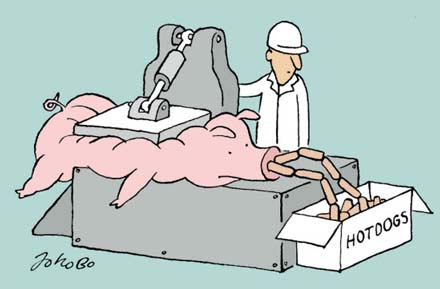
On May 1, 2019, then-Mayor Jorge Elorza signed a "Plastic Bag Ban" into effect in the city of Providence. This ordinance unequivocally banned businesses from using single-use plastic bags to contain the items purchased by their customers. And yet, five years later, I had to stop the deli just two blocks away from Providence City Hall from putting my Friday-Treat sandwich, iced tea, chips, second bag of chips, and cookie (I'm a weak man) into a plastic bag. Huh? What? Why? I remember walking down the street with food flowing out of every pocket, a living example of the distance between "policy", "execution of policy," and "desired behavior change."

The issue with the plastic bag ban was an issue of enforcement. In Providence, businesses were supposed to face a series of escalating fines for noncompliance, but the ban did not specify the agency responsible for inspecting and fining businesses. The ban did not have a budget to finance those increased responsibilities or a funding apparatus to ensure they did not lapse. After an initial flurry of communication, the ban was delegated to a newly created Sustainability Office alongside other small responsibilities like addressing the disproportionate impact of climate change on low-income frontline communities. And so, a
policy of a complete ban was relegated to newsletters and social media posts, and failed to achieve any
desired behavior change. How Do We Create Safe Schools?
I could not stop thinking about this dilemma as I read through RIDE's "Guidance for Rhode Island Schools on Transgender and Gender Nonconforming Students," PPSD's "Guidelines and Implementation Strategies for Nondiscrimination - Transgender and Gender Expansive Students," and my own Woonsocket Education Department's "Transgender Student Non-Discrimination Policy." In line with the chapter "Queering Our Schools," I saw a central argument that schools should be places where every child, parent, and staff member feel comfortable openly occupying all parts of their identity. However, the central question in my mind is how these policies actually create the conditions necessary for that to occur.
The authors of "Rethiniking Sexism, Gender, and Sexuality" published their work in January 2016, a year before the first inauguration of Donald Trump. They spend a large amount of time and space focused on individual actions that people can take. It cites the work of advocates like Sasha or Jeydon Lordo in advocating from the ground up, credits the role of administrators and unions in supporting staff, and cites the responsibility of social studies teachers like myself to provide historical context. I credit all of these examples as important, and yet feel obligated to copy and paste the text that appears above a blog from the Indian Health Service's fantastic description of Two-Spirit, a topic I always cover when we discuss pre-Columbian America:
Per a court order, HHS is required to restore this website as of 11:59 PM, February 14 2025. Any information on this page promoting gender ideology is extremely inaccurate, and disconnected from the immutable biological reality that there are two sexes, male and female. The Trump Administration rejects gender ideology and condemns the harms it causes to children, by promoting their chemical and surgical mutilation, and to women, by depriving them of their dignity, safety, well-being, and opportunities. This page does not reflect biological reality and therefore the Administration and this Department rejects it.
I would guess that there was a glaring lack of support for gender nonconfirming students in 2016, and unfortunately I think it's only been upgraded by active opposition. But I'm a good civics teacher, and so I know that education, and particularly safe guarding students who have unique educational needs, falls to the state. And so I turn to the RI Department of Education (RIDE).

RIDE's Guidelines do some incredibly helpful things. The systematic review of federal and state laws provide the backbone to this document and lend weight and validity, while the definitions provides each district with a rapid and necessary education. Providence and Woonsocket mirror the format, definitions, and policies provided in these guidelines, though I do particularly appreciate small differences like Woonsocket's note that teachers may use their discretion when sharing information with parents. I think Delpit would agree with me when I say there can be a gulf between the comfort a liberally-minded Social Studies teacher feels on these issues versus a Woonsocket parent.
But is a set of well written policies really going to accomplish RIDE's goal of ensuring a safe and supportive environment for all students? And is delegating ALL of these responsibilities to the schools going to create actual behavior change? Or is this just an empty policy without any form of execution?
In Providence, they claim they will have Transgender and Gender Expansive Student Point Teams at every school. As I was writing this blog post, I recieved an email from my building principal. It says:
The MLL Department in Woonsocket is looking for any educator to join the MLL Regulations Implementations Team. You do not need to teach MLLs. All voices are welcome. [. . . ] Due to the scope and complexity of new regulations, this is the team that is responsible for a phased and thoughtful rollout. [. . . ]
This is not a good sign. I think more often than not, this is the end-result of handing off complex and difficult responsibilties to already overstretched districts.
What if . . .
So I will go back and start with an asset mindset instead of a deficit one. We have a good goal of creating a safe and supportive environment for all students. And we have a reasonably good set of guidelines and policies. And I think that in every school we have students and faculty who could come together and support this work. We are bursting with all the conditions necessary to actually make this goal happen.
What we lack is that bridge of "execution" that connects policy to behavior change. What if instead of just guidelines, we had funding incentives? What if instead of instructions we had an Office of Civil Rights at RIDE to make sure this work happened? Policies are fine, but people are the ones who actually make the work happen.