Tuesday, April 14, 2026

Neurodivergent or just in 7th Grade?

The article "What is Neurodiversity?" by Caroline Miller gives a level of flexibility to the concept of atypical neurological behavior.  Miller notes that the term originated from working to reduce stigma around lifelong neurological conditions such as autism or dyslexia, and now is broadly applicable to a range of conditions or even a self-diagnosis of neurodivergence. The article argues that the most important thing in all cases is to work from a perspective of strengths, what they are good at, and things they need to improve. This creates a growth mindset that is open, welcoming, and acknowledges that no two brains work exactly alike. 

As Miller says, neurodiversity can be something particularly appealing to a middle school perspective. Giving a young person an easy explanation for challenges can help them understand their difference, and can even create a sense of community with others who might identify as neurodiverse. I have met many students who are self-diagnosing as neurodiverse, and I think Miller's analysis of the clarity that they can derive is accurate. However, I have also found that while these types of diagnoses provide students with a potential answer, the transition to real action or addressing these challenges is a less frequent occurance. 

The challenge for me really begins when working with students through their neurodiversity challenges. To begin with, both years I've taught students who have severe ADHD and lack consistent access to medication. They are left with the challenge of school without something that has worked for them in the past, and I think this really adds a layer of frustration and anger to the students' reality. I cannot imagine how frustrating it is to have a much easier time at school because you've finally recieved medicine, and then having that taken away. 

Additionally, thinking about strengths and growth areas makes perfect sense, and Miller focuses on parents at several points in the article. But in the school where I work, I think most of the pressure to identify those growth areas and work with the student on improving falls on to a teacher. While I am not trying to deny our responsibility, I also feel underqualified to do this type of work. I can try to lead from a place of support and empathy, but identifying how a 12 year old can work concretely to address focus or learning isseus feels like a very heavy challenge.


Tuesday, April 7, 2026

Get ICE, AI, and other Acronyms out of Schools

An essential part of being a teacher is caring about our students' lives and the communities we serve. 


This quote from the opening editorial of Volume 40, No. 2 of Rethinking Schools stood out to me as the overarching thesis that connected the stories of this issue. Whether used to describe the leadership of teachers and our unions in pushing back against ICE, a tension point in negotiating how to best support trans youth, or examining AI in schools, this essential component of care centers the manner in which teachers engage on these issues. For me, it is simultaneously why teaching is the hardest job I have ever had and why I cannot imagine doing anything else. 

In "Kicking ICE Out of Our Schools and Communities," the editors of Rethinking Schools examine the rising pressure on school communities to protect our vulnerable community members. While the article correctly notes that ICE is not new, and the damage incurred by both the Obama and Biden administrations, I think it is also essential to remember that at the beginning of the Trump Administration, many officers left ICE. This paramilitary force that exists now is filled with recruits who specifically joined the administration to participate in these brutal, inhumane raids and crackdowns on our most vulnerable community members. It's against this force that teachers have emerged as strong and consistent opposition. 

Two components of this editorial stood out to me. The first was the note on the power of educating students and the broader community on their rights. After seeing so many incidents of violence and abuse, it is easy to feel like our legal rights are insignificant. However, as the editorial notes, educating people and children about their rights during searches or when questioned has proven to be a powerful weapon. "Ensuring community members know their rights increases their willingness to defend each other against abuses." 


The importance of unions in this fight was also significant to me. The examples of the Chicago Teachers Union or the United Teachers of Los Angeles leading this charge show the vital importance of organized labor. Joining a union is a real factor in why I became a teacher, and this editorial shows how much more powerful teachers can be when we have the backbone of a union. I think it's also been a real factor in the modern fight against teacher unions. Whether disguised as "pro Charter School" or under the excuse of looking for waste, teacher unions have been the target of many attacks in the past years. It's hard to separate these attacks from a desire to limit the political power and influence of these groups. 

Supporting Students in Schools Outside of ICE

Two articles stood out to me in this issue in addition to the ICE articles. In "Trans Teacher, Detrans Student: A Roadmap for Transformation," Jaymie Metivier discussed the real difficulty in navigating how to support their gender nonconforming students. As the first adult that many of these students have met that mirror their own gender identity, Metivier discusses the real challenge of wanting to serve as a positive and supportive adult while also hyper-aware that they could be accused of grooming or encouraging young people to go against their parents and families. Reading about that difficult balance, I again thought of the quote at the head of this blog. I relate to the feeling of wanting to be an advocate and support system while also aware of our limitations as a temporary adult in these young people's lives. 

In "Educators over AI" I also saw this quote emerge. I think as teachers we see the negative impact of AI in a direct and constant way. The section discussing an AI generated unit on World War II in particular stood out to me. As a Social Studies teacher, I am deeply concerned with how AI treats history as black and white. Students type in complex questions and they receive a clear definitive answer. Rather than understanding that history differs depending on perspective, or that sometimes clear answers cannot be found, students walk away from their computers thinking that there are right and wrong answers. I am incredibly skeptical of these tools in an educational setting. 

I really enjoyed this magazine, and got a lot out of many of the articles. I particularly liked, and will end my reflections, on Linda Christensen's piece on using writing to embrace humanity. I worry teaching history about the lessons that students can learn. If you teach world history as I do, the reality of the world becomes a pretty brutal realization for students. My curriculum goes through colonization, the genocide of Indigenous Americans, revolutions, globalization and industrialization, the partitioning of Africa, and the World Wars. What lessons are students going to take away from this class? That humans are violent? That might equals right in most historical circumstances? 

Christensen discusses how to build student awareness of the power of positive action. She notes on the power of having students reflect on circumstances where people stood up and helped, and how to work with students through reflecting on regret. I think this type of intentional work, building and encouraging students' humanity, is essential to add to my curriculum. 

Thursday, April 2, 2026

Sidelining Joseph McCarthy

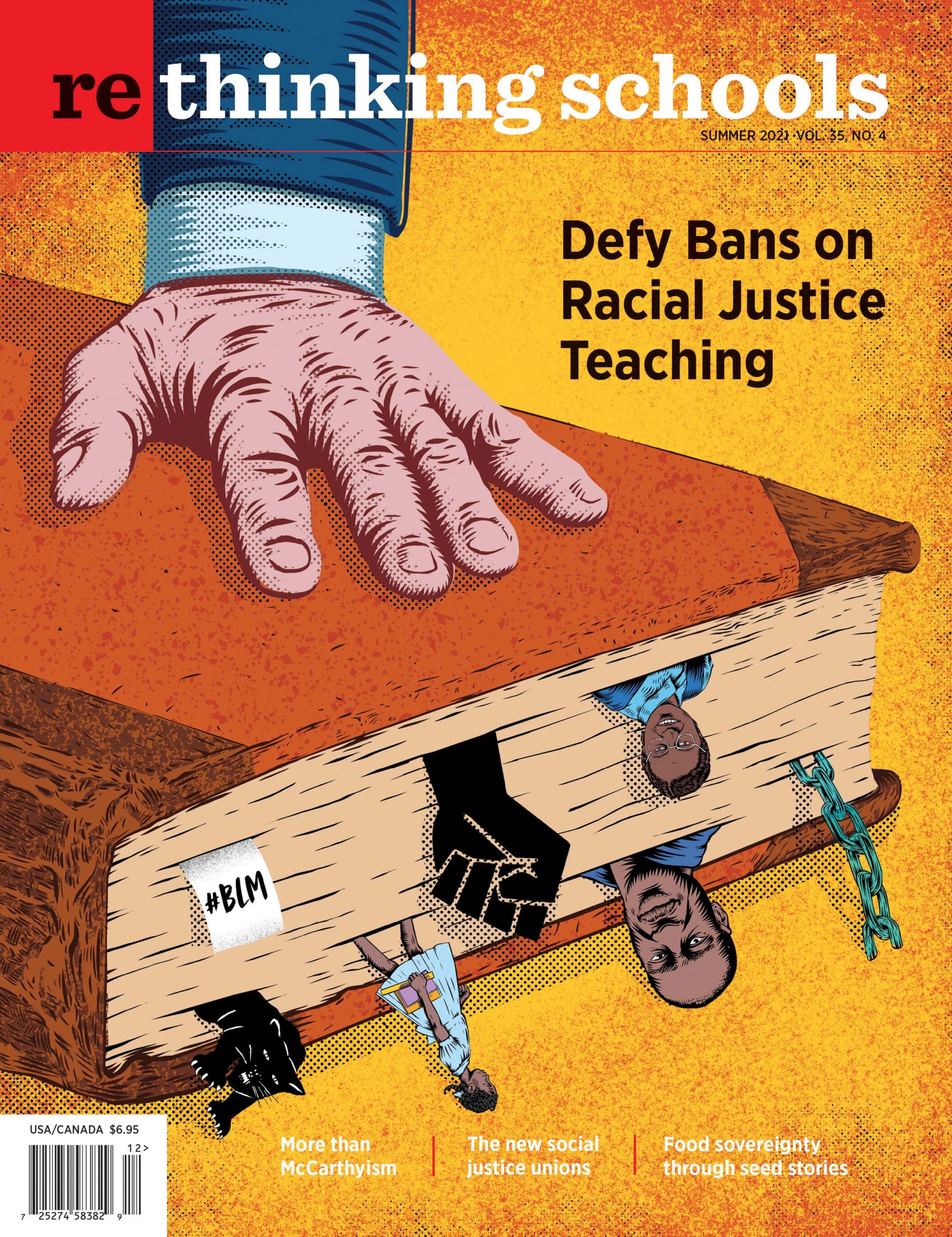
Reading over some of your [my classmates'] blogs this semester, I have occasionally grown concerned by my often myopic focus on the larger policy conversation around education. But as Popeye would say, I yam what I yam, and so I could not help but be drawn in by the Summer 2021 issue, Defy Bans on Racial Justice Teaching

My oldest sister worked in one of the largest educational research firms in the country for nearly a decade. At the beginning of 2025, she had several projects focused on integration in urban schools, equitable access to afterschool programs, and just generalized work examining how the American education system repeatedly fails most students who are not wealthy and white. Within two months, her entire portfolio of projects was decimated. The Department of Education pulled over $90 million from the organization, and nearly all their projects were shuttered.  

This issue was released four years before the second Trump administration came into power. However, many of the articles feel like they could be issued today. The opening editorial shares a rallying cry for post-Civil War southern education programs, "The Alphabet is Abolitionist." Knowledge is power. Education is powerful. This is why our educational programs have been under relentless attack from waves of legislation that have been passed in over half the states in the USA. From eliminating funding to trying to police the words we say in our classrooms, there are political forces in this country who are desperately trying to return our schools to that Prussian dream of obedience and efficiency. 

I think it's incredibly important to pay close attention to this legislation, depressing as it is, because it shows the fear of the regressive and racist forces in our country. Centered in so much horrible language is this, "The United States and _[Insert State Name Here]__ are not fundamentally, institutionally, or systemically racist or sexist." I would argue that this statement is really at the core of our current political debate. 

How Does This Work? The McCarthyism Example

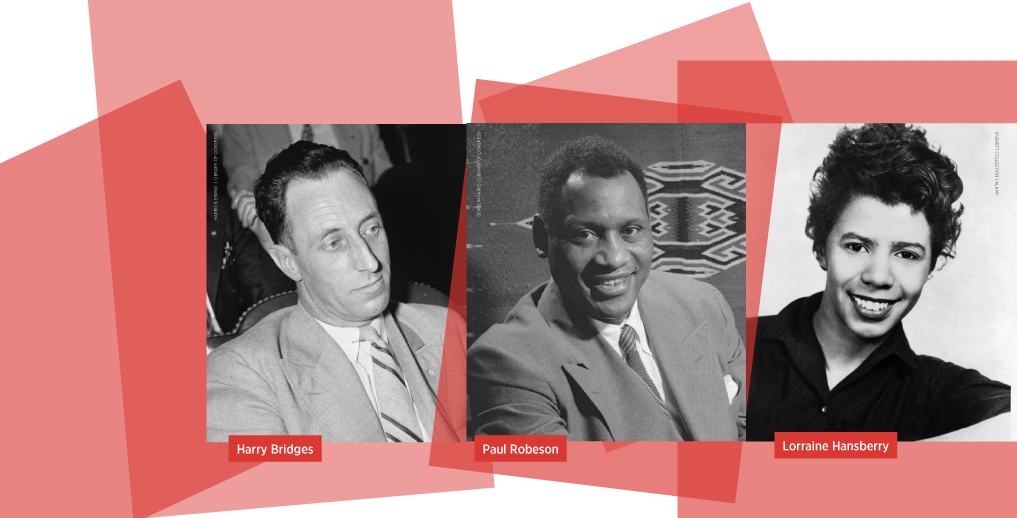
In "More than McCarthyism," Ursula Rolfe-Rocca used the example of how an era of activism from 1945 to 1960 is remembered in textbooks. The "Second Red Scare" centers one person in the narrative of how we teach this period, he even gets in the title of my section here. Rolfe-Rocca unpacks how centering Joseph McCarthy in this historical narrative erases the victims, consequences, and real motivations behind the vicious crackdowns of this era.  


Rolfe-Rocca notes that even the term first and second Red Scares diminishes the reality. Essentially, from the conclusion of World War I through to the Civil Rights Movement, the American government used various committees and intelligence agencies to illegally arrest, harass, and spark violence against nearly any organization that was working for some form of equitable societal improvement. Rolfe-Rocca looked over five textbooks to see how this event was covered. 

As I noted before, Rolfe-Rocca notes that centering McCarthy in this history is hugely problematic. McCarthy, a genuinely evil person, is afforded line after line of details, anecdotes, and analysis of his motivation. The victims of these attacks and arrests are rarely recognized, named, or segregated to inserts or additional readings. It also creates a very convenient narrative that McCarthyism ends in triumph, as Congress condemns him in 1954 for conduct unbecoming to the Senate. 

A larger evil that Rolfe-Rocca describes is that the books' focus on McCarthy obfuscates the actual political fight that was occurring. The books give a cursory description of communism and note that McCarthy's investigations went far beyond economic beliefs, but then move on. They do not share with students how the people targeted were those trying to address the systemic inequity at the heart of American society. They do not connect the ideas of communism with the idea of protest. 


Ursula Rolfe-Rocca ends by describing how she has altered the unit. Instead of teaching about McCarthy, she teaches about 27 different people who were attacked. They are men and women, immigrants and native-born, young and old, racially diverse, in and out of government, rich and middle class and poor, Queer and straight. She then uses their stories and experiences to teach this history. 

Connecting the Two Threads: 

Something terrifying continues to happen in the Trump Era of America. Similar to McCarthy, we allow one person to occupy all the space in our stories. After Elon Musk left his short-term position as the leader of the Department of Government Efficiency (DOGE), the press really stopped covering the impact of these cuts. We stopped talking about the funding that was taken away, the programs that were shuttered, the impact of erasing these funds so rapidly and callously. Instead, we have some conveniently attention-grabbing figures to focus our attention on. 

As lawsuits proceed against the Department of Government Efficiency (the famous Must-led DOGE), a video clip of a deposition came to light that rapidly became viral. The video shows a former DOGE staffer who personally shuttered millions of dollars in programs. He discusses using AI bots to comb through grants, struggles to define any terms related to diversity, equity, and inclusion, and explains that a documentary about female Holocaust survivors is discriminatory because it's only about women. People enjoyed this video because it shows discomfort and no small amount of stupidity. But also think about the impact that giving THIS person so much power to erase work he clearly has no comprehension of.  

What is happening in America today deserves more attention. We again are at a point in history where people trying to address the systemic inequity at the root of society are being attacked, marginalized, and silenced. Let's hope that in 50 years when this period of history is covered, we don't just have to read about Donald Trump. 

Neurodivergent or just in 7th Grade?

The article "What is Neurodiversity?" by Caroline Miller gives a level of flexibility to the concept of atypical neurological beha...